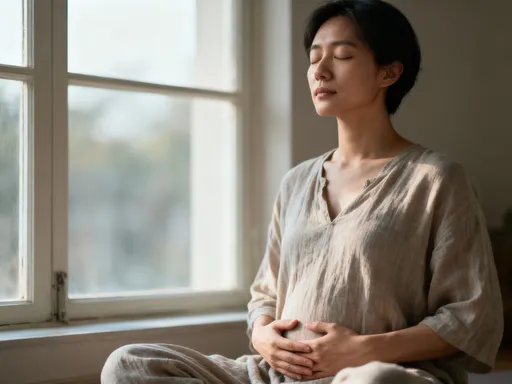
How I Found Calm in Just 5 Minutes a Day — No Mat Needed
Stress used to own my mornings—rushing, scrolling, heart racing before I even got out of bed. Then I discovered a simple blend of yoga meditation and traditional Chinese wisdom that changed everything. No hour-long sessions, no perfect posture—just five minutes of intentional breathing and mindful movement. I felt calmer, focused, and more in control. This isn’t magic. It’s a small shift with real impact, and it can work for anyone wanting to improve their daily life.
The Modern Burnout Problem
In today’s world, many women between the ages of 30 and 55 carry invisible weight—the constant pressure of managing work, family, household responsibilities, and personal expectations. The day often begins not with peace, but with a flood of notifications, a mental checklist, and a sense of urgency that never truly fades. This chronic state of stress is not just emotional; it is deeply physiological. The body’s stress response, originally designed for short-term survival, becomes overactivated when demands are continuous and recovery is rare. As a result, cortisol levels remain elevated, sleep quality declines, digestion slows, and mental clarity diminishes. This cycle, often referred to as burnout, is now recognized as a public health concern by organizations such as the World Health Organization.
What makes modern life particularly taxing is the erosion of natural rhythms. In generations past, daily life followed the sun—waking with light, working during daylight, and winding down at dusk. Today, artificial lighting, digital screens, and round-the-clock connectivity disrupt the body’s internal clock, or circadian rhythm. The brain struggles to distinguish between day and night, leading to poor sleep onset and fragmented rest. At the same time, societal expectations often equate busyness with worth, making it difficult to pause without guilt. Women, especially those raising children or caring for aging parents, frequently place their own well-being at the bottom of the list.
Amid this growing crisis, many are turning to holistic, non-invasive solutions that support long-term balance rather than quick fixes. Practices such as yoga meditation and principles from traditional Chinese medicine (TCM) have gained renewed attention—not as exotic alternatives, but as grounded, accessible tools for restoring equilibrium. These systems do not demand radical lifestyle changes. Instead, they offer gentle, repeatable methods to realign the body and mind with their natural functioning. The appeal lies in their simplicity and sustainability, making them ideal for those who need relief but lack time or energy for complex regimens.
Bridging Ancient Wisdom and Modern Life
At the heart of traditional Chinese medicine is the concept of Qi (pronounced “chee”), the vital energy that flows through the body along pathways known as meridians. When Qi moves freely, health and vitality are maintained. When it becomes blocked or imbalanced, discomfort and fatigue arise. Unlike Western medicine, which often focuses on treating isolated symptoms, TCM emphasizes the interconnectedness of physical, emotional, and environmental factors. One of its foundational ideas is the balance of Yin and Yang—opposing yet complementary forces. Yin represents rest, nourishment, and inward energy; Yang stands for activity, movement, and outward expression. Optimal health occurs when these forces are in harmony, not when one dominates the other.
TCM also assigns emotional significance to specific organs. The liver, for example, is associated with the smooth flow of Qi and is deeply affected by stress and frustration. When liver Qi becomes stagnant—often due to prolonged emotional strain—it can manifest as irritability, headaches, or tightness in the shoulders and neck. The heart, in TCM theory, houses the Shen, or spirit, and is linked to mental clarity and emotional stability. When overstimulated by constant input or anxiety, the Shen becomes unsettled, leading to restlessness and difficulty concentrating. These insights align remarkably well with modern understandings of the mind-body connection, particularly in how chronic stress impacts both mental focus and physical tension.
Yoga meditation complements these principles by offering practical tools to regulate energy and calm the nervous system. Breathwork, a central component of yoga, directly influences the autonomic nervous system. Slow, deep breathing activates the parasympathetic response—the body’s “rest and digest” mode—counteracting the “fight or flight” state driven by stress. Similarly, mindful movement, even in small doses, helps release physical tension and improves circulation, supporting the free flow of Qi. When combined, these practices create a synergy: TCM provides the framework for understanding imbalance, while yoga meditation offers the method for restoring balance. The beauty of this integration is that it does not require belief in mysticism, only an openness to listening to the body’s signals and responding with care.
Why Quick Practices Actually Work
A common misconception about mindfulness and meditation is that they must be time-consuming to be effective. Many assume that only lengthy sessions—20 minutes or more—can yield real benefits. However, a growing body of scientific research challenges this notion. Studies conducted by institutions such as Harvard Medical School and the University of California, Los Angeles, have shown that even brief daily practices of five to ten minutes can lead to measurable improvements in mental and physical health. These short sessions have been associated with reduced levels of cortisol, the primary stress hormone, as well as increased activity in the prefrontal cortex, the area of the brain responsible for decision-making and emotional regulation.
The key lies in consistency, not duration. This concept is known as the “minimum effective dose”—the smallest amount of effort required to produce a meaningful result. In fitness, for example, just ten minutes of daily strength training can maintain muscle mass. In meditation, five minutes of focused breathing each day can train the brain to return to calm more easily. Over time, these micro-moments accumulate, reshaping neural pathways through a process called neuroplasticity. The brain learns to default to a state of greater resilience, even in the face of daily stressors. This is especially valuable for women managing multiple roles, who may not have the luxury of long, uninterrupted periods for self-care.
Another advantage of short practices is their ability to fit seamlessly into existing routines. They can be done before stepping out of the car after dropping the kids at school, during a bathroom break at work, or while waiting for the kettle to boil in the morning. Because they require no special equipment or environment, they are highly adaptable. A woman commuting by train can practice mindful breathing without drawing attention. Someone at home can stretch gently while supervising homework. The accessibility of these moments makes them sustainable. Unlike hour-long yoga classes that may feel like another item on an already full schedule, five minutes of intentional stillness can feel like a gift, not a burden. The goal is not perfection, but presence—a daily acknowledgment that one’s well-being matters.
Building Your 5-Minute Routine: A Step-by-Step Guide
Creating a sustainable 5-minute practice begins with structure. A simple, repeatable sequence makes it easier to begin, even on chaotic days. One effective format includes three phases: grounding (1 minute), breathwork (2 minutes), and gentle movement or visualization (2 minutes). Each phase serves a specific purpose and can be adjusted based on personal needs and environment. The consistency of the structure builds familiarity, reducing the mental effort required to start.
The first minute is dedicated to grounding—bringing awareness to the present moment. This can be done by sitting comfortably, feet flat on the floor, and noticing the points of contact between the body and the chair or ground. One might silently name five things they can see, four they can touch, three they can hear, two they can smell, and one they can taste. This sensory check-in helps interrupt the cycle of rumination and redirects attention to the now. For those in a noisy or public setting, this step can be done discreetly, with eyes open and minimal movement.
The next two minutes focus on breathwork. Diaphragmatic breathing, also known as belly breathing, is highly effective. It involves inhaling slowly through the nose, allowing the abdomen to rise, and exhaling fully through the mouth, feeling the belly fall. A simple count of four on the inhale, six on the exhale, can deepen the calming effect. Another option is box breathing: inhale for four counts, hold for four, exhale for four, hold for four. This technique is particularly useful for regaining focus before a meeting or calming down after an argument. The breath acts as an anchor, signaling the nervous system to shift from stress to stillness.
The final two minutes can include gentle physical movements or visualization. For movement, one might rotate the wrists and ankles, roll the shoulders, or stretch the neck side to side. These small motions release tension stored in the body, especially in areas prone to stress, like the jaw, neck, and upper back. Alternatively, a woman might close her eyes and visualize a peaceful place—a quiet forest, a calm lake, or a sunlit room. She can imagine the details: the sound of leaves, the warmth of light, the feeling of safety. This mental imagery activates the same neural pathways as real experiences, promoting relaxation. The entire sequence can be completed without leaving a desk or standing up, making it truly accessible.
Listening to Your Body: The TCM Way
One of the most empowering aspects of blending yoga meditation with TCM is learning to read the body’s signals. In a culture that often encourages pushing through discomfort, this practice invites a different relationship with physical sensations. Tight shoulders, for instance, are not just the result of poor posture—they may indicate liver Qi stagnation, a TCM pattern linked to unexpressed stress or frustration. Dry or irritated eyes can reflect an overworked liver, especially in those who spend long hours in front of screens. Frequent sighing, irritability, or a tendency to snap at loved ones may point to an unsettled Shen, or spirit, in the heart system.
By tuning into these subtle cues, women can respond with timely, gentle interventions rather than waiting for symptoms to escalate. A few minutes of deep breathing during a moment of frustration can prevent the buildup of emotional tension. A brief neck stretch after a long phone call can release physical strain before it turns into a headache. This proactive approach aligns with TCM’s emphasis on prevention—maintaining balance before imbalance becomes illness. It shifts the focus from fixing problems to nurturing well-being, fostering a sense of agency and self-trust.
Importantly, this is not about diagnosing or labeling conditions. It is about cultivating awareness and responding with kindness. A woman does not need to be an expert in TCM to benefit from its insights. She only needs to notice how she feels and take small steps to care for herself. Over time, this habit of listening deepens the connection between mind and body, making it easier to recognize when rest is needed or when energy is running low. In a world that often asks women to be endlessly available, this practice becomes a quiet act of resistance—a way to honor one’s limits and prioritize inner harmony.
Real Changes, Not Quick Fixes
The benefits of a daily 5-minute practice often emerge gradually, not dramatically. There is no sudden transformation, but rather a steady unfolding of improved well-being. Many women report falling asleep more easily, waking less frequently during the night, and feeling more rested in the morning. Others notice improvements in digestion—less bloating, more regular bowel movements—likely due to reduced stress-related interference with gut function. Mental clarity often returns, making it easier to focus on tasks without constant distraction. Emotional resilience grows, allowing for more patience with children, better communication with partners, and a greater sense of inner calm.
These changes are not the result of intense effort, but of regular repetition. The body responds to consistency, not heroics. Just as brushing teeth daily prevents cavities, a short daily practice prevents the accumulation of stress. It is not about eliminating stress entirely—that is neither possible nor desirable, as some stress is necessary for growth. Rather, it is about building the capacity to recover, to return to balance more quickly after disruption. This resilience is what makes the difference in long-term health.
It is also important to clarify what this practice is not. It is not a substitute for medical treatment, nor is it a cure for serious conditions. Women with chronic health issues, anxiety disorders, or depression should continue to work with qualified healthcare providers. This routine is best understood as a complementary support—a way to enhance overall well-being and create a stronger foundation for healing. It is about lifestyle improvement, not symptom elimination. When approached with realistic expectations, it becomes a sustainable part of daily life, not another source of pressure to “get it right.”
Making It Stick: Small Habits, Big Impact
Habit formation is the final, crucial piece of the puzzle. Even the most effective practice will not help if it is done only occasionally. Research in behavioral psychology shows that habits are more likely to stick when they are linked to existing routines—a concept known as “habit stacking.” For example, a woman might practice her 5-minute sequence immediately after brushing her teeth in the morning, or right before she pours her evening tea. By attaching the new behavior to a well-established one, the brain creates a natural cue, reducing the need for motivation or willpower.
Another key to sustainability is flexibility. Life is unpredictable, and there will be days when even five minutes feels impossible. The goal is not perfection, but persistence. Missing a day does not mean failure; it simply means beginning again the next day. This mindset shift—from all-or-nothing to gentle continuity—makes the practice more forgiving and more likely to endure. It also aligns with the core principles of both yoga and TCM, which emphasize balance, compassion, and self-acceptance.
Over time, this small daily act becomes more than a routine—it becomes a form of self-respect. It sends a powerful message: “I am worth a few minutes of my own time.” In a culture that often measures worth by productivity, this quiet investment in oneself is revolutionary. It is not about achieving more, but about being more present, more grounded, more at peace. And as these moments accumulate, they ripple outward, improving not only personal well-being but also the quality of relationships and daily interactions.
This approach isn’t about overhauling your life. It’s about honoring your body’s need for pause and balance through tiny, meaningful actions. Blending yoga meditation with traditional Chinese insights offers a practical path to lasting well-being—one that fits real life, not the other way around. Always consult a healthcare provider before starting new wellness practices, especially with existing conditions.