You Won’t Believe These Hidden Bazaars in Bukhara
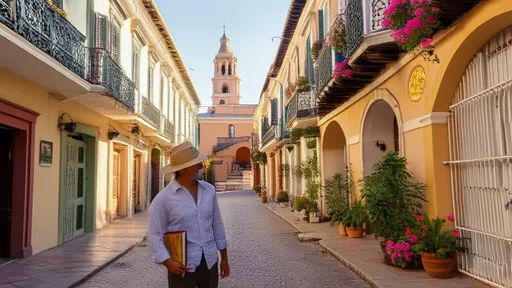
Bukhara, Uzbekistan, is more than ancient minarets and sunbaked streets—it’s a shopper’s secret paradise. I wandered far from tourist trails and stumbled upon vibrant bazaars where silk whispers history and spices paint the air gold. These markets aren’t just places to buy—they’re living stories. If you think shopping here is just souvenirs and overpriced trinkets, think again. The real magic? It’s hidden in plain sight. Few travelers realize that beneath the city’s UNESCO-listed skyline lies a network of intimate market lanes, family-run stalls, and artisan workshops where commerce is still an art form. This is where tradition isn’t performed—it’s lived. To walk through Bukhara’s lesser-known bazaars is to step into a world where every thread, spice, and silver pendant carries the weight of centuries. And the most remarkable part? You don’t need a guidebook to find them—just curiosity, respect, and a willingness to look beyond the obvious.
The Soul of Bukhara Lives in Its Markets
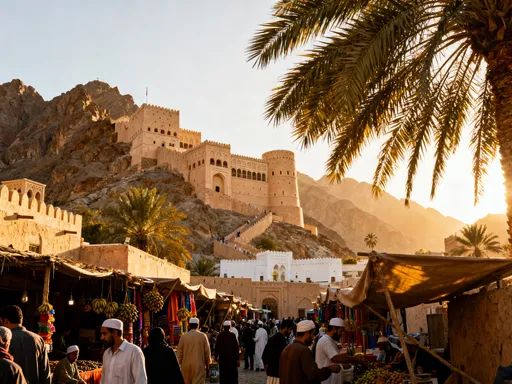
Bukhara’s identity is inseparable from its marketplace culture. For over a thousand years, trade has pulsed through its veins, long before tourism became a livelihood. Even today, the rhythm of daily life aligns with the opening of wooden shutters, the unfurling of cloth awnings, and the first calls of vendors arranging their wares. The scent of cumin roasting on flat griddles, the warmth of freshly baked non bread rising from clay ovens, and the soft clink of copper bowls being polished—these are the sounds and smells that define the city’s commercial heart. Unlike modern shopping centers designed for efficiency, Bukhara’s markets operate on a slower, more human tempo. Transactions unfold through conversation, eye contact, and shared tea, not barcode scanners or digital receipts.
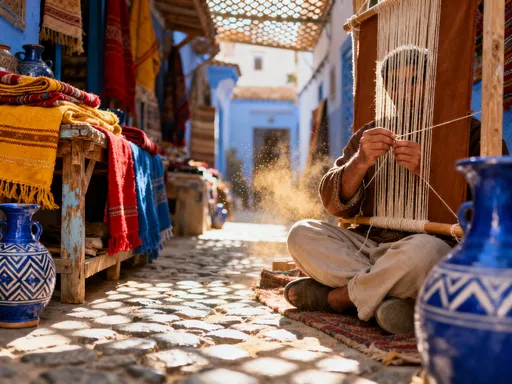
What makes these markets truly special is their role as custodians of heritage. They are not staged for tourists but sustained by local needs and traditions. Artisans sit cross-legged on woven mats, carving wooden spoons or hammering copper trays with geometric precision. Women in patterned scarves sort through piles of hand-dyed silk threads, preparing them for the next stage of weaving. Children dart between stalls, delivering steaming glasses of green tea to their fathers or uncles. This is not a performance—it’s everyday life. Each interaction, each exchange of goods, reinforces social bonds that have endured for generations. In a world increasingly dominated by globalized retail, Bukhara’s bazaars offer a rare glimpse into a system where commerce is deeply personal and community-centered.
Shopping here feels like stepping into a living museum because it is one. The architecture alone tells a story: centuries-old domed caravanserais still shelter merchants beneath turquoise tiles and arched portals. The layout of the old city follows trade routes established during the Silk Road era, when caravans laden with spices, textiles, and precious stones passed through Bukhara on their way between China and the Mediterranean. Even now, the flow of people and goods mirrors those ancient patterns. To walk through these alleys is to follow in the footsteps of merchants, scholars, and pilgrims who once shaped the city’s destiny. The continuity is palpable—not in grand monuments, but in the quiet acts of daily trade that keep tradition alive.
Lyab-i Hauz: The Hidden Hub You’ve Never Heard Of
Just steps away from Bukhara’s most famous landmark, the serene Lyab-i Hauz pool, lies a network of narrow alleys that few tourists ever explore. While most visitors pause for photos by the reflecting waters, the real magic unfolds in the quiet lanes branching behind the surrounding madrasas. Here, tucked beneath shaded courtyards and behind unmarked doorways, are small family-run stalls selling handcrafted treasures that embody the soul of Uzbek artisanship. These are not souvenir shops with mass-produced trinkets, but intimate spaces where the past is preserved through skilled hands and patient labor.
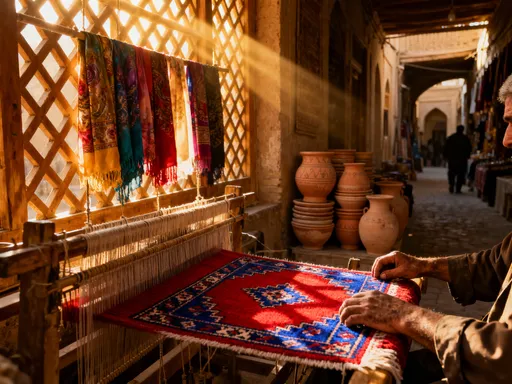
One such spot is a carpet weaver’s corner, hidden behind a wooden gate near the Kukeldash Madrasah. Inside, an elderly woman sits on a low stool, her fingers moving rhythmically as she ties thousands of woolen knots into a deep red Bukhara rug. The design—a central medallion surrounded by intricate floral motifs—is being created without a sketch, drawn entirely from memory passed down through generations. Nearby, a woodcarver uses chisels to etch delicate arabesques into a sandalwood box, each groove revealing the grain beneath. These artisans don’t advertise; they wait, quietly, for those who take the time to look beyond the main pathways.
What makes Lyab-i Hauz’s hidden market lanes so special is their authenticity. There are no price lists in English, no aggressive vendors calling out to passersby. Instead, you’re likely to be offered a seat and a glass of tea before any transaction is discussed. This is commerce rooted in hospitality, not sales pressure. The atmosphere is unhurried, inviting contemplation rather than impulse buying. You might spend twenty minutes watching a suzani embroidery take shape, thread by thread, before even asking the price. And when you do, it’s likely to be fair—not because of bargaining, but because value here is measured in time, skill, and respect.
Despite its proximity to major tourist sites, this area remains largely undiscovered by guidebooks and tour groups. That invisibility is part of its charm. It allows visitors to experience Bukhara not as a curated destination, but as a living city with rhythms of its own. For the discerning traveler, these hidden corners offer something far more valuable than any souvenir: a moment of genuine connection. And if you listen closely, you might hear the whisper of history in the rustle of silk, the tap of a hammer on wood, or the soft hum of an artisan at work.
Toki Sarrafon Dome: Where Gold Meets History
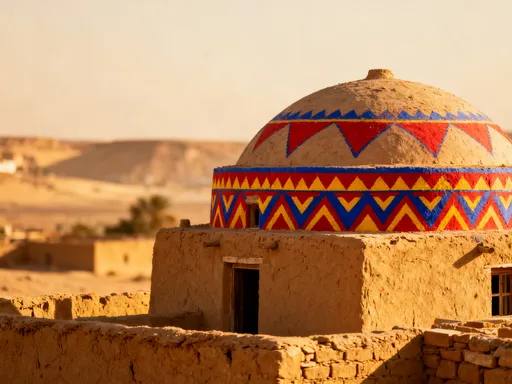
Among Bukhara’s cluster of historic trading domes, Toki Sarrafon stands out as a relic of financial sophistication in the 16th century. Originally a hub for money changers serving Silk Road merchants, this elegant brick structure with its turquoise-tiled dome now houses a carefully curated collection of silver jewelry, antique coins, and handcrafted metalwork. Stepping inside is like entering a vault of cultural memory, where every piece on display carries a lineage that stretches back centuries. The dome itself is small, but its significance is immense—a testament to Bukhara’s role as a financial and cultural crossroads long before modern banking existed.
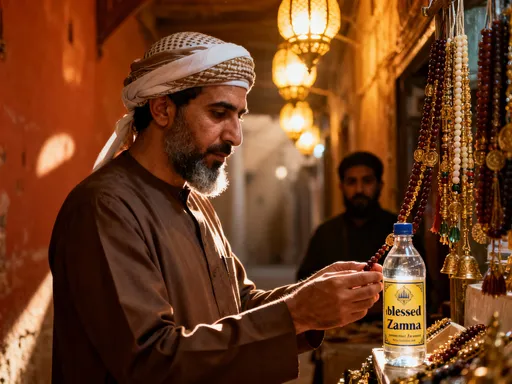
Vendors here operate from glass cases filled with oxidized silver rings, filigree pendants, and engraved cufflinks, each item reflecting traditional Uzbek motifs: the ram’s horn symbolizing strength, the pomegranate representing fertility, and the paisley-like “botan” design echoing Persian influences. Unlike mass-produced jewelry found near tourist hotspots, these pieces are often made by master silversmiths belonging to officially recognized artisan guilds. These guilds, supported by cultural preservation programs, ensure that authenticity is maintained through strict standards of craftsmanship and material quality. Buyers can feel confident that what they purchase is not a replica, but a continuation of a living tradition.
For travelers, visiting Toki Sarrafon offers both beauty and education. Many vendors are happy to explain the meaning behind different designs or demonstrate how a particular pendant was hand-stamped using centuries-old techniques. Some even keep samples of historical coins once traded in the very same space, linking the present to the past in a tangible way. This depth of knowledge elevates the experience from mere shopping to cultural immersion. It’s not uncommon for visitors to leave with not just a piece of jewelry, but a story they can carry home.
To make the most of a visit, timing matters. Early mornings, between 8 and 10 a.m., are ideal—fewer crowds, cooler temperatures, and vendors more willing to engage in conversation. Carrying small denominations of Uzbek som is practical, as change can be difficult with larger bills. When it comes to haggling, a respectful approach is key. While prices here are generally fair due to the regulated nature of the market, a polite negotiation is still part of the custom. A smile, a compliment on the craftsmanship, and a modest counteroffer often lead to a mutually satisfying outcome. Above all, the goal should not be to get the lowest price, but to participate in a tradition of exchange that values dignity as much as the goods themselves.
Samanid Park Weekend Market: Local Life Unfiltered
Just a short walk from the ancient Samanid Mausoleum, a different kind of market comes alive every Friday through Sunday morning. Unlike the polished stalls near tourist centers, this weekend bazaar is where Bukharans themselves shop for food, textiles, and household goods. There are no brochures advertising it, and few tour guides include it in their itineraries. Yet, for anyone seeking an unfiltered view of local life, it is an essential destination. This is not a market designed for visitors—it exists for the community, and that authenticity is what makes it so compelling.
Vendors line the perimeter of the park with low wooden tables and cloth-covered carts. One stall overflows with hand-dyed ikat silks in deep indigo, saffron yellow, and emerald green, each bolt unique due to the organic dyeing process. Another displays baskets of dried mulberries, apricots, and raisins, their sweetness concentrated by the Central Asian sun. Ceramic zarfs—small, handleless tea holders designed to protect fingers from hot glasses—are stacked in colorful pyramids, painted with floral patterns that vary slightly from artisan to artisan. These are functional objects, not decorative novelties, still used in homes across the city.
The true charm of this market lies in its atmosphere. Families stroll together, elders pause to sip tea from porcelain bowls served by mobile vendors, and children inspect trays of honeycomb with wide eyes. There is no rush, no pressure to buy. Conversations flow freely, laughter rises above the hum of bartering, and the air carries the mingled scents of fresh herbs, warm bread, and sun-warmed earth. It’s a place where commerce blends seamlessly with community, where shopping is not a chore but a social ritual.
For visitors, the experience is both accessible and respectful. While you may stand out as a foreigner, locals are generally welcoming, especially if you approach with a smile and a willingness to engage. Using a few basic Uzbek phrases—“Narx qancha?” (How much?) or “Rahmat” (Thank you)—goes a long way. Photography should be done discreetly, always asking permission before capturing portraits. The market is not a stage; it is real life unfolding. By observing with humility and appreciation, travelers can gain a deeper understanding of Bukhara’s culture—one that no museum exhibit or guided tour can fully convey.
Behind the Carpets: Meeting the Makers in Rural Workshops
To truly understand the art of Bukhara’s famous wool-pile carpets, one must leave the city and visit the surrounding villages where weaving remains a way of life. In small rural cooperatives and family homes, women and men continue the meticulous process of creating carpets that are both functional and sacred. These are not factory-made reproductions, but hand-knotted masterpieces born from generations of knowledge. Travelers who seek out these workshops are not just buyers—they become witnesses to a centuries-old craft that defines Uzbek identity.
The process begins long before the loom is set up. Local sheep are sheared in spring, their wool cleaned, carded, and spun by hand. Natural dyes are prepared from plants, roots, and minerals—madder root for red, walnut husks for brown, and indigo for deep blue. These dyes are applied in small batches, ensuring rich, lasting color that ages gracefully over time. Only then does the actual weaving begin, with artisans tying thousands of individual knots per square inch, following patterns passed down orally or through sample fragments preserved for decades.
One memorable moment occurred in a courtyard outside the village of Gijduvan, where I was invited to try my hand at knotting under the guidance of a master weaver named Dilfuza. Within minutes, it became clear how demanding the work is—my fingers fumbled, the tension was uneven, and my knot looked nothing like the neat, uniform rows surrounding me. Dilfuza laughed kindly and corrected my technique, showing how the right pressure and twist make all the difference. That brief attempt gave me a profound respect for the skill involved. A single medium-sized carpet can take months, even years, to complete, depending on its complexity.
Buying directly from these workshops has ethical and cultural significance. It ensures that the artisans receive fair compensation, bypassing middlemen who often take the majority of profits. More importantly, it supports the preservation of a heritage craft at risk of fading in the face of industrial production. When you purchase a carpet from a village weaver, you are not just acquiring a beautiful object—you are helping sustain a tradition that binds families, communities, and history together. Many cooperatives now welcome visitors by appointment, offering guided tours and tea ceremonies alongside their wares. This openness reflects a desire to share their culture, not just sell it.
Spice Alley: A Forgotten Passage Bursting with Color
Between the domed bazaars of Toqi Telpak Furushon and Toqi Zargaron lies a narrow, easily overlooked lane known informally as Spice Alley. Lined with cloth sacks piled high with saffron, paprika, cumin, and dried herbs, this hidden corridor is a sensory explosion. The air is thick with the warm, earthy aroma of ground spices, mingling with the sweet scent of dried rose petals and crushed cardamom. Small wooden scoops rest on the sacks, inviting passersby to sample, smell, and compare. This is not a tourist trap with pre-packaged sets—this is where local cooks come to stock their kitchens with the finest ingredients available.
One of the most striking sights is the vibrant display of saffron, sold in small paper packets or glass vials. The deep crimson threads are hand-harvested from crocus flowers grown in nearby regions, and their quality here surpasses anything found in tourist-oriented shops. Vendors encourage customers to crush a single thread between their fingers—if it stains yellow, it’s genuine; if it leaves a red residue, it may be dyed. Other staples include sumac for tartness, dried barberries for Persian-inspired dishes, and a unique blend called “sho’rba mix” used in traditional soups. For those unfamiliar with Central Asian cuisine, many sellers patiently explain uses and proportions, often offering small samples of spiced teas or warm almond halva to accompany the conversation.
What sets Spice Alley apart is its authenticity and quality control. Because these spices are intended for daily use, there is little incentive to cut or adulterate them. The vendors themselves rely on their reputation for purity, and word-of-mouth matters more than flashy packaging. For travelers, this means a rare opportunity to bring home ingredients that are both fresh and culturally significant. However, it’s important to consider storage and transport. Spices should be kept in airtight containers, away from heat and light. When flying internationally, it’s advisable to declare them if required by customs, though most dried herbs and spices are permitted in reasonable quantities.
Exploring Spice Alley is more than a shopping trip—it’s an immersion into the culinary soul of Bukhara. Each scent tells a story of family recipes, seasonal harvests, and regional pride. To walk through this alley is to understand how flavor shapes identity, and how something as simple as a pinch of cumin can carry the essence of a culture.
Smart Shopping: How to Explore Like a Local, Not a Target
To fully appreciate Bukhara’s hidden bazaars, it helps to approach them with the mindset of a respectful guest rather than a consumer. Simple choices—what you wear, how you speak, when you arrive—can make a significant difference in the quality of your experience. Dressing modestly, for instance, is not just a cultural courtesy but a practical way to blend in. Women should consider covering shoulders and knees, while men may opt for long pants and collared shirts. This small gesture signals respect and often leads to warmer interactions with vendors and artisans.
Language also plays a role. While many merchants in tourist areas speak some English, venturing into lesser-known markets increases the likelihood of encountering those who do not. Learning a few basic Uzbek phrases can open doors: “Salom” (Hello), “Yaxshimisiz?” (How are you?), and “Narx qancha?” (How much?) are useful starters. Even attempting pronunciation earns goodwill. When combined with gestures and a friendly demeanor, communication becomes effortless, transcending language barriers.
Timing is another key factor. Visiting markets early in the morning, between 7 and 9 a.m., allows you to avoid crowds and experience the bustle as it unfolds naturally. Vendors are more relaxed, products are fresher, and the light is ideal for photography. Carrying small bills in local currency is essential, as change can be difficult to obtain, especially in rural workshops or small stalls. Keeping a simple shopping journal—noting names, prices, and stories behind purchases—adds meaning to your collection and helps track spending.
It’s also wise to be cautious near high-traffic tourist areas like Registan Square, where counterfeit goods and aggressive middlemen are more common. Fake “antique” coins, machine-made “handwoven” carpets, and overpriced souvenirs are frequently sold to unsuspecting visitors. By contrast, the hidden bazaars described in this guide offer authenticity because they cater to locals first. The best way to identify genuine craftsmanship is to ask questions—about materials, process, and origins. Artisans are usually proud to explain their work, and their willingness to engage is often a sign of legitimacy.
Finally, remember that curiosity should never override respect. While it’s natural to want to photograph or inquire about a craft, always ask permission before taking pictures of people or private spaces. Some families may decline, and that decision must be honored. Shopping in Bukhara is not just about acquiring objects—it’s about building bridges between cultures, one thoughtful interaction at a time.
Conclusion
Shopping in Bukhara isn’t transactional—it’s transformative. Each purchase carries legacy, every vendor shares a piece of identity. By seeking out these hidden venues, travelers don’t just collect objects; they become part of a story centuries in the making. The true treasure isn’t what you bring home—it’s what you take in. Whether it’s the memory of an elder weaving silk by hand, the taste of warm halva shared in a spice alley, or the weight of a silver pendant forged with ancestral techniques, these moments linger far longer than any souvenir. Bukhara’s bazaars are not just places to spend money—they are spaces to connect, to learn, and to honor a living culture. And in that exchange, both buyer and seller are enriched. The next time you walk through an ancient market, remember: you’re not just shopping. You’re participating in history.