You Won’t Believe These Hidden Gems in San Miguel de Allende
San Miguel de Allende is more than just pretty streets and pink sunsets—it’s a place where every corner tells a story. I went not knowing what to expect, and left completely changed. From cobblestone alleys that glow at golden hour to quiet hilltop viewpoints with panoramic magic, this town surprised me at every turn. It’s not just about sightseeing; it’s about feeling something real. The air carries the scent of fresh tortillas and blooming bougainvillea, while the distant chime of church bells marks time like a slow, steady heartbeat. Locals greet each other by name, and artists pause in doorways to admire the way light dances across stucco walls. This is not a destination frozen in time, but one that lives and breathes with quiet intention. Let me take you through the most breathtaking spots that locals love—and why you should too.
First Impressions: Stepping Into a Living Postcard
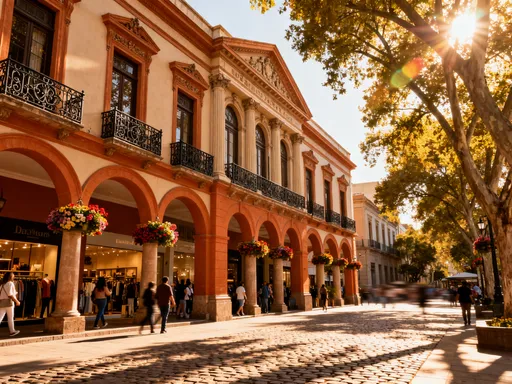
Arriving in San Miguel de Allende feels like stepping into a watercolor painting that has somehow come to life. Perched at 6,400 feet in Mexico’s central highlands, the city greets visitors with crisp mountain air and a golden light that seems to gild every surface. The colonial architecture—ochre, terracotta, and deep rose—climbs gently up the hillsides, each building bearing the quiet dignity of centuries. Unlike coastal resorts or bustling metropolises, San Miguel exudes a sense of calm reverence, as if it has mastered the art of living beautifully without fanfare.
The historic center, designated a UNESCO World Heritage site in 2008, remains remarkably preserved. This is not due to artificial restoration, but to a deep-rooted respect for tradition and craftsmanship. The streets are paved with smooth, time-worn cobblestones that echo footsteps like a soft rhythm. As you walk, you might catch the warm aroma of pan dulce from a corner bakery or the faint sound of a guitar drifting from an open studio window. These are not curated experiences—they are the everyday music of the city.
What sets San Miguel apart is not just its beauty, but its soul. Artists, writers, and retirees from around the world have made it a home, yet it has not lost its Mexican heart. The blend of international influence and local authenticity creates a rare balance. You’ll see women in aprons selling handmade tamales beside galleries showcasing contemporary sculpture. Children laugh on their way to school past centuries-old churches. This is a place where history and modern life coexist with grace, inviting visitors not just to observe, but to participate in its quiet rhythm.
Parroquia de San Miguel Arcángel: The Iconic Heartbeat
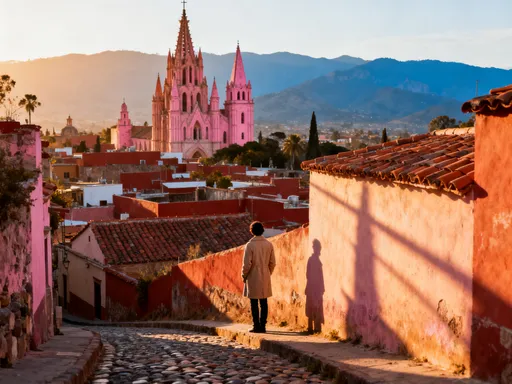
Rising like a crown above the Jardín Allende, the Parroquia de San Miguel Arcángel is the city’s most recognizable landmark. Its pink neo-Gothic spires, inspired by the French architect Zeferino Gutiérrez—a self-taught stonemason with no formal training—defy easy categorization. Constructed in the late 19th century, the church blends European architectural ideals with local artistry, resulting in a structure that feels both grand and deeply personal. The intricate façade, carved from cantera stone, glows in the afternoon sun, casting delicate shadows that shift with the hours.
But the true magic of the Parroquia lies not just in its appearance, but in its role as the city’s emotional center. The steps leading down to the Jardín Allende offer one of the most photographed views in Mexico, yet it never feels overly staged. In the early morning, the square is quiet, save for a few elderly couples walking their dogs or a street vendor arranging flowers. By late afternoon, musicians begin to play—sometimes a mariachi trio, other times a solo harpist—and the plaza hums with gentle energy. It’s a space for gathering, reflection, and celebration, often all at once.
For the best experience, visit at sunrise or just before dusk. At dawn, the light is soft and golden, painting the church in warm hues while the city slowly wakes. At twilight, the spires are silhouetted against a lavender sky, and the illuminated façade becomes a beacon in the gathering dark. Whether you’re there to pray, photograph, or simply sit and absorb the atmosphere, the Parroquia reminds you that some places are more than buildings—they are keepers of collective memory.
Callejones and Secret Passageways: Wandering Off the Map
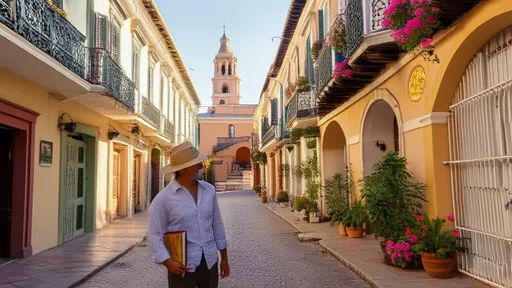
One of the greatest joys of San Miguel de Allende is getting lost—on purpose. The city’s network of narrow alleyways, known locally as *callejones*, invites exploration. These winding paths, often too tight for cars, connect plazas, homes, and hidden courtyards, revealing layers of the city that postcards rarely capture. Callejón del Beso, or the Alley of the Kiss, is perhaps the most famous—a narrow passage where balconies nearly touch, said to be a spot where forbidden lovers once met. But beyond the legend, it’s the quieter alleys that offer the most enchanting discoveries.
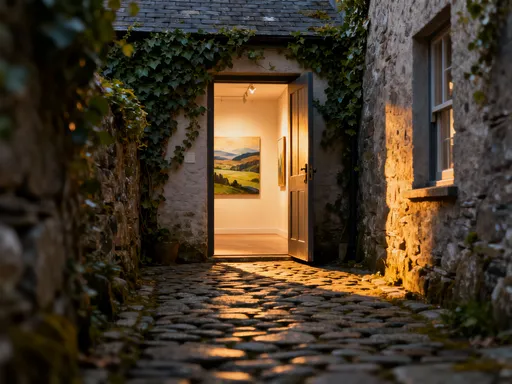
Take Callejón del Correo, where sunlight filters through laundry lines strung between buildings, or Callejón del Monte, where a sudden turn reveals a centuries-old chapel tucked into the hillside. These passages are not tourist attractions; they are part of daily life. You might stumble upon a ceramicist shaping clay in an open doorway, a grandmother sweeping her doorstep, or a small courtyard blooming with jasmine. Each turn feels like a secret shared between you and the city.
Wandering these alleys requires no map—only curiosity and comfortable shoes. Many lead to dead ends, but that’s part of the charm. A dead end might open onto a bench with a breathtaking view of the valley, or a tiny café serving *café de olla* in hand-painted mugs. The key is to slow down, look up, and notice the details: the texture of weathered stone, the color of a painted door, the way shadows stretch across the walls as the sun moves. In these moments, you’re not just visiting San Miguel—you’re experiencing it.
El Mirador: Where the City Unfolds Beneath You
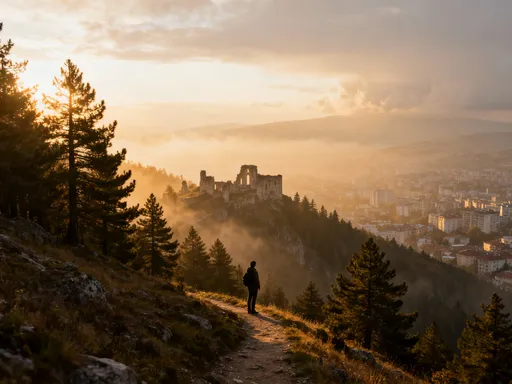
For a panoramic view that captures the soul of San Miguel, few places compare to El Mirador. Nestled on the northern edge of town, this quiet viewpoint requires only a short uphill walk, yet it delivers a reward that feels monumental. From this vantage point, the city spreads out below like a patchwork of red-tiled roofs, church towers, and winding streets, all framed by rolling hills and distant peaks. The air is cooler here, and the silence—broken only by the rustle of leaves or the distant bark of a dog—creates a sense of peaceful detachment.
Locals often come to El Mirador at sunrise, when the city is still wrapped in soft blue light and the first rays of sun catch the highest spires. It’s a time for quiet reflection, for breathing deeply and feeling grounded. By late afternoon, the light turns golden, and the view becomes almost cinematic, with long shadows stretching across the rooftops. Photographers favor this hour, but even without a camera, the scene imprints itself on memory.
What makes El Mirador special is not just the view, but the sense of discovery. Unlike more commercialized viewpoints, it remains unspoiled—no railings, no ticket booths, no crowds. A simple stone bench invites you to sit and stay awhile. And if you time your visit right, you can stop at a small family-run stand nearby, where an elderly couple sells tamales wrapped in corn husks, still warm from the steamer. This is authenticity in its purest form: a moment of connection between place, people, and presence.
Casa del Mayorazgo de la Canal: History Wrapped in Stone
Just a few blocks from the bustling Jardín Allende lies a quiet sanctuary of history and culture: the Casa del Mayorazgo de la Canal. Built in the 18th century as the residence of a powerful landowning family, this grand mansion now serves as a cultural center, preserving the city’s colonial legacy without turning it into a museum piece. The baroque façade, with its intricate carvings and central balcony, stands as a testament to the craftsmanship of the era. Yet what lies within is even more remarkable—a peaceful courtyard surrounded by arched colonnades, where bougainvillea spills over the walls and a fountain murmurs softly.
Unlike many historic homes turned tourist sites, this space remains alive with purpose. It frequently hosts free exhibitions of local art, poetry readings, and chamber music performances, blending education with everyday cultural life. Visitors are welcome to walk through the courtyard, sit on a bench, and simply absorb the atmosphere. There’s no rush, no pressure to move on. The house feels less like a relic and more like a living room for the community.
Its location, just off the main tourist path, makes it a perfect retreat for those seeking depth over superficial sightseeing. You won’t find souvenir stands or guided tour groups here—just the quiet dignity of a space that honors the past while embracing the present. For anyone interested in the true story of San Miguel—the families who shaped it, the art that sustains it, the traditions that endure—this is a must-see. It’s a reminder that history isn’t just in books; it’s in the stones, the gardens, and the people who keep them alive.
Cerro del Maestro: A Hike with Soul
Rising gently above the northern outskirts of town, Cerro del Maestro offers one of the most accessible and rewarding hikes in the region. The trail, well-marked but rarely crowded, winds through native scrubland dotted with cacti, agave, and wild herbs that release their scent with every step. The ascent is moderate—about 45 minutes round-trip—making it suitable for most fitness levels. Along the way, the city gradually unfolds below, and the sounds of traffic and conversation fade into the rustle of leaves and the occasional call of a hawk overhead.
At the summit, a small stone shrine marks the spot, adorned with flowers, candles, and handwritten prayers. This is not a commercialized pilgrimage site, but a place of quiet devotion, where locals come to reflect, give thanks, or simply be still. The view from the top is expansive: San Miguel’s rooftops glow in the sunlight, the Parroquia’s spires stand tall, and the surrounding countryside stretches into the distance. On clear days, you can see the Sierra Madre foothills in the haze.
What makes this hike special is its sense of solitude and spirituality. Unlike more famous trails that draw large crowds, Cerro del Maestro remains a local favorite, untouched by mass tourism. It’s common to see an elderly woman walking with a rosary or a young couple sitting in silence, watching the clouds drift by. For visitors, it offers a rare opportunity to experience nature and culture as one—where the landscape is not just seen, but felt. Going early in the morning ensures cooler temperatures and the chance to witness the city wake up below, its lights flickering out one by one.
Beyond the Sights: How San Miguel Changes You
What lingers long after you leave San Miguel de Allende is not just the beauty of its streets or the clarity of its mountain air, but the way it shifts your sense of time and presence. In a world that often feels rushed and fragmented, this city teaches the quiet art of slowing down. It’s in the way an artisan spends hours painting a single tile, or how a café owner remembers your usual order after just one visit. These small moments accumulate into a deeper awareness—a mindfulness that feels earned, not forced.
There is something inherently grounding about being in a place where beauty is not manufactured, but lived. The colors of the buildings are not chosen for Instagram, but because they’ve always been that way. The music in the plaza is not piped in, but played by someone who loves their instrument. These are not curated experiences; they are the natural rhythms of a community that values craftsmanship, connection, and calm.
For many visitors, especially women in their 30s to 50s who carry the weight of daily responsibilities, San Miguel offers a rare kind of restoration. It’s not about luxury spas or extravagant shopping, but about reclaiming a sense of self through simplicity. Sipping coffee on a sun-drenched terrace, watching shadows move across a courtyard wall, or chatting with a local potter—these are the moments that restore balance. They remind you that joy doesn’t have to be loud or complicated. Sometimes, it’s found in the quiet act of being present.
And perhaps that is the true gift of San Miguel: it doesn’t just show you a new place—it helps you see yourself more clearly. In its winding alleys and sunlit plazas, in the kindness of its people and the stillness of its hills, there is space to breathe, to reflect, to remember what matters. It’s a place that doesn’t ask you to do more, but to be more.
San Miguel de Allende isn’t just a list of attractions—it’s an experience that lingers. Its scenic spots aren’t merely photogenic; they invite connection, wonder, and quiet joy. Whether you’re drawn by art, history, or the simple beauty of light on stone, this town offers more than views. It offers meaning. Go not just to see, but to remember what it feels like to be truly present.