You Won’t Believe These Hidden Gems in Mumbai – My Immersive Journey Through the City’s Soul
Mumbai isn’t just about crowded streets and Bollywood glamour — it’s a city that breathes life in every corner. I dove deep into its rhythms, from sunrise chai by the sea to quiet moments in ancient temples hidden in plain sight. What I found were not just scenic spots, but living stories. This isn’t your typical tourist run-through — it’s an immersive journey through the heart of India’s boldest city. Come with me, and see Mumbai like never before.
The Pulse of the City: Starting in South Mumbai
South Mumbai is where the city first greets you — not with quiet elegance, but with a vibrant embrace. The Gateway of India, standing proudly at the edge of the Arabian Sea, is more than a monument; it is a witness to history, a silent observer of colonial departures and national celebrations. As morning light spills over the waterfront, locals gather with steaming cups of chai, their conversations blending with the cries of seagulls and the distant hum of ferries. This is where the pulse begins — steady, strong, and impossible to ignore.
Just a short walk away, Colaba Causeway pulses with color and commerce. Vendors line the narrow streets, offering everything from handcrafted jewelry to Bollywood posters, spices to vintage cameras. It’s easy to feel overwhelmed, but that’s part of the experience. The key is not to rush, but to move with the flow. Watch how a woman in a crisp cotton sari haggles for mangoes with a smile, or how a schoolboy pauses to watch a street performer juggle flaming torches. These moments are not staged — they are real, unfiltered, and deeply human.
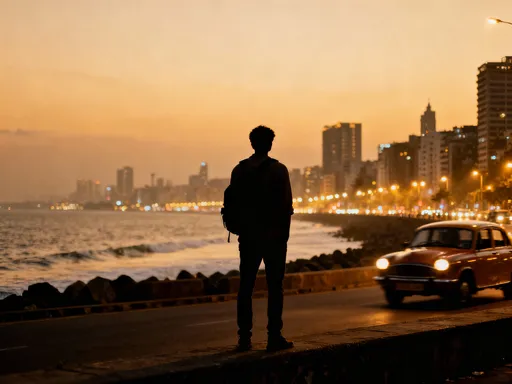
As the day wanes, Marine Drive comes alive in golden hour. The curved boulevard, lined with Art Deco buildings, glows under the soft light of the setting sun. Locals stroll in pairs or families, children chasing kites, couples sharing quiet conversations. The sea breeze carries salt and laughter, and for a moment, the city’s chaos recedes. This is Mumbai at its most poetic — not in grand gestures, but in the way people claim small joys amidst the rush. To truly feel the city, start here, where history, culture, and daily life converge.
Beyond the Postcard: Sanjay Gandhi National Park’s Wild Escape
Nestled within the northern sprawl of Mumbai lies a secret most visitors never discover — Sanjay Gandhi National Park, a 104-square-kilometer oasis of greenery and wildlife. It’s hard to believe that within one of the world’s most densely populated cities, such a vast natural sanctuary exists. Yet here, peacocks strut along forest trails, langur monkeys leap between trees, and the air hums with the calls of over 250 bird species. This is not a manicured garden, but a living, breathing ecosystem that has resisted the city’s relentless expansion.
One of the park’s most remarkable features is the Kanheri Caves, a network of 109 rock-cut Buddhist monuments dating back to the 1st century BCE. Carved directly into the volcanic rock, these ancient chambers once served as monasteries and meditation halls. Walking through them, you feel the weight of centuries — the cool stone walls, the faint echoes of chants long past, the intricate carvings that speak of devotion and craftsmanship. It’s a humbling reminder that long before Mumbai became a financial capital, it was a place of spiritual retreat.
What makes this park truly special is its accessibility. Families from nearby suburbs come on weekends to picnic under the trees, students hike the trails for nature study, and yoga groups gather at dawn for silent meditation. The park doesn’t exist in isolation; it is woven into the fabric of city life. Birdwatchers with binoculars stand beside office workers in shirtsleeves, all pausing to listen to the call of a Malabar whistling thrush. In a city defined by motion, this green lung offers something rare: stillness with purpose. To visit is to remember that nature and urban life need not be enemies — they can coexist, even thrive, side by side.
A Walk Through Time: Exploring the Historic Fort District
If South Mumbai is the city’s heartbeat, the Fort District is its memory. Once the center of British colonial administration, this neighborhood is a living museum of Victorian and Gothic architecture. Towering buildings with arched windows, ornate balconies, and clock towers stand shoulder to shoulder with modern banks and government offices. What’s remarkable is how seamlessly the old and new coexist — not as relics, but as active participants in daily life.
Take Flora Fountain, officially known as Hutatma Chowk, where streams of water once symbolized purity and renewal. Today, it’s a roundabout where commuters weave through traffic, yet the fountain remains a quiet anchor of history. Nearby, the Old Secretariat building, with its grand colonnades and weathered stone, houses government offices where civil servants still file reports in rooms that echo with colonial-era decisions. The past isn’t locked away — it’s present in the footsteps of those who walk these corridors every day.
Walking through the Fort District feels like flipping through the pages of a well-worn book. The Bombay High Court, with its red-and-buff stone façade, evokes the grandeur of British jurisprudence, while the University of Mumbai’s Rajabai Clock Tower rises like a cathedral of knowledge. Even the side streets tell stories — a chai wallah serving tea beneath a 19th-century archway, a tailor repairing suits in a shop that’s been family-run for three generations. This is heritage not preserved behind velvet ropes, but lived, breathed, and reshaped by time. For the mindful traveler, every building, every corner, becomes a doorway into Mumbai’s layered soul.
Local Life Unfiltered: The Charm of Dadar’s Parallel Road and Prabhadevi
To see Mumbai as its residents do, step away from the postcard sights and into the neighborhoods where life unfolds without spectacle. Dadar’s Parallel Road and the lanes of Prabhadevi offer just such an experience — a mosaic of markets, temples, and community spaces that pulse with authenticity. Here, there are no guided tours, no souvenir stalls, only the rhythm of daily routines carried out with quiet dignity.
Parallel Road is a sensory delight. Flower vendors string garlands of marigolds and jasmine, their colors bright against the gray pavement. Spice shops overflow with turmeric, cumin, and cardamom, their fragrances mingling in the warm air. Butchers display fresh cuts of meat beside vegetarian stalls selling lentils and rice — a reflection of Mumbai’s diverse dietary traditions. Women in colorful saris bargain with vendors, their voices rising and falling in rapid Marathi, while children dart between carts with schoolbags slung over their shoulders.
Nearby, Prabhadevi reveals another layer of local culture. The Parsi colony here is home to some of the city’s oldest Zoroastrian families, and their influence is evident in the clean, tree-lined lanes and modest but elegant homes. A visit to a Parsi café — perhaps one serving dhansak or kheema pavs — offers a taste of a cuisine that is both rich and comforting. These eateries are not tourist traps; they are community hubs where elders read newspapers over coffee and young professionals grab a quick lunch between meetings.
What makes this area so special is its openness. Locals don’t perform for outsiders — they simply live. But if you walk with respect, smile, and show genuine interest, you’ll be welcomed. A shopkeeper might offer you a sample of homemade papad, or a grandmother might point you toward a hidden temple tucked between buildings. This is Mumbai at its most intimate — not in grand monuments, but in the quiet exchanges that build trust and connection.
Art, Faith, and Community: The Spiritual Side of Bandra
Bandra, one of Mumbai’s most dynamic suburbs, is often celebrated for its nightlife and celebrity homes. But beneath its modern surface lies a deep well of faith, art, and community spirit. At the heart of it all stands Mount Mary Church, perched on a hill overlooking the sea. Every September, thousands gather for the Bandra Fair, a vibrant celebration of devotion, music, and food. Yet even on ordinary days, the church exudes a quiet serenity, drawing pilgrims and wanderers alike to light candles and offer silent prayers.
Just a few streets away, the walls tell a different kind of story — one of color, rebellion, and creativity. Bandra’s bylanes are a canvas for street artists, their murals depicting everything from local heroes to social messages. A portrait of a fisherwoman might gaze down from a crumbling wall, or a painted dove might soar above a narrow alley. These artworks are not commissioned; they emerge organically, a testament to the neighborhood’s creative pulse. They remind visitors that art in Mumbai isn’t confined to galleries — it lives in the streets, shaped by the people who walk them.
And then there’s the chai. A cup of cutting chai near Bandstand isn’t just a drink — it’s a ritual. Served in small glasses, strong and sweet, it fuels conversations between friends, lovers, and strangers. As the sun sets over the Arabian Sea, young couples stroll along the promenade, joggers weave past, and kite sellers call out their wares. In this moment, Bandra feels like a city within a city — one where tradition and modernity don’t clash, but dance. Faith, art, and youth culture coexist here not by accident, but by design, shaped by generations who value both roots and change.
The Sea That Binds: Coastal Walks from Worli to Nariman Point
Mumbai is a city shaped by water. The Arabian Sea doesn’t just border it — it defines it. And nowhere is this more evident than along the coastal stretch from Worli to Nariman Point. As dusk falls, the city begins to exhale. Office workers shed their formal wear, families spill onto the sidewalks, and the seafront transforms into a communal living room.
The walk begins at Worli Sea Face, where the iconic Bandra-Worli Sea Link glows in the distance like a string of pearls. Fishermen mend their nets on the shore, their boats bobbing gently in the tide. Children fly kites shaped like peacocks and stars, their laughter carried away by the wind. Further south, the pace slows near Haji Ali Dargah, the white-domed shrine that appears to float on the water at high tide. Devotees line up to offer prayers, their footsteps echoing on the causeway, while tourists pause to take photos, struck by the harmony of faith and beauty.
By the time you reach Nariman Point, the city skyline sparkles with lights. Skyscrapers rise like sentinels, their glass facades reflecting the last streaks of sunset. Yet even here, amid the symbols of wealth and power, the sea remains the true ruler. Couples sit on benches, sharing stories. Elderly men play chess on portable boards. Street vendors sell bhel puri and roasted corn, their carts glowing under yellow lamps. The water crashes against the rocks, steady and eternal. In these moments, you realize that Mumbai’s soul isn’t in its buildings or brands — it’s in the way people gather by the sea, again and again, to breathe, to connect, to belong.
Why Immersion Beats Itinerary: Slowing Down to Truly See Mumbai
In an age of curated travel lists and Instagram checklists, Mumbai resists being reduced to a series of photo ops. The city rewards those who slow down, who are willing to wander without a fixed destination. An itinerary might tell you to visit the Gateway of India, then head to Chor Bazaar, then catch a train to Juhu. But immersion means allowing the city to guide you — to follow a scent of frying samosas down an alley, to strike up a conversation with a chai wallah, to sit on a park bench and simply watch.
One of the best ways to experience Mumbai deeply is by riding the local trains. These crowded carriages are the city’s circulatory system, carrying millions each day. To board one is to become part of the rhythm — to stand shoulder to shoulder with students, clerks, and artisans, all moving with purpose. It’s not always comfortable, but it’s honest. You see how people read newspapers, share snacks, help each other with bags. You hear snippets of Marathi, Hindi, Gujarati, and English — a linguistic tapestry that reflects the city’s diversity.
Timing matters, too. Avoid the 9–10 a.m. and 6–7 p.m. rush hours if you can. Visit temples early in the morning when the air is cool and the crowds are thin. Explore markets on weekdays, when vendors are more relaxed and willing to chat. Seek out quiet corners — a garden behind a library, a seaside bench away from the main promenade — where you can sit and absorb the atmosphere without distraction.
The truth is, the most memorable moments in Mumbai are rarely planned. They happen when you miss a turn and stumble upon a hidden courtyard with blooming bougainvillea. When a stranger invites you to join a family picnic at Carter Road. When you hear devotional music drifting from a temple at twilight and pause to listen. These are the moments that stay with you — not because they’re picturesque, but because they’re real. The real scenic spots aren’t on any map; they’re in the connections you make, the stories you hear, the way the city quietly lets you in.
Mumbai reveals itself only to those who listen. Beyond its iconic skyline and famous sites lies a deeper beauty — one found in fleeting glances, shared laughter, and the hum of life at every turn. This journey isn’t about ticking boxes; it’s about opening your senses. When you stop chasing the city and start walking with it, that’s when Mumbai truly begins.