You Won’t Believe These Hidden Gems in Kruger National Park
Stepping into Kruger National Park, I expected wildlife—but not the stunning human-made wonders tucked between the bushveld. Beyond roaring lions and towering elephants, there’s a side of Kruger most visitors miss: historic outposts, architectural echoes of the past, and lodges that blend seamlessly with nature. These landmark structures aren’t just functional—they tell stories of conservation, culture, and daring exploration. What I discovered transformed my idea of what a safari can be. Far from being merely a backdrop for animal sightings, the park’s built environment reveals a deep commitment to harmony between people and nature, where every stone wall and thatched roof carries meaning. This is not just a wilderness; it is a living museum of resilience and vision.
Arrival and First Impressions: More Than Just Animals
Entering Kruger National Park through the Malelane or Phabeni Gates, one is immediately struck by the seamless transition from modern road to wild frontier. The tarmac gives way to gravel, the air grows thick with the scent of acacia and damp earth, and the first glimpses of kudu or warthog darting through the underbrush signal that you have crossed into another world. Yet, subtle signs of human presence remain—well-marked signs, sturdy bridges over seasonal rivers, and ranger posts built low and unobtrusive beneath the mopane trees. These are not intrusions but thoughtful integrations, designed to serve without dominating. The park’s infrastructure does not shout; it whispers, respecting the natural rhythm of the land.
Kruger is often celebrated for its biodiversity, and rightly so—home to over 500 bird species, 147 mammal species, and the famed Big Five. But its history as a protected area since 1926 adds another layer to its identity. This is not untouched wilderness; it is carefully stewarded land, shaped by generations of conservationists, rangers, and architects who understood that protecting nature also means designing responsibly within it. From the moment you enter, the balance between access and preservation becomes evident. Speed limits are enforced not just for safety but to minimize disturbance. Rest areas are spaced deliberately, offering shade, water, and information without overdevelopment.
What becomes clear early in the journey is that Kruger is not only a sanctuary for animals but a stage for human ingenuity in service of nature. The roads follow ancient animal trails. The campsites are positioned where they cause minimal disruption to water sources. Even the placement of binocular stands at lookout points considers both visitor experience and environmental impact. This thoughtful planning reflects a philosophy that has evolved over decades: that conservation is not just about fencing off land, but about creating a coexistence where people can witness the wild without diminishing it. As the sun sets on the first day, casting golden light across the savanna, the realization settles in—this park is more than a collection of animals. It is a testament to foresight, care, and quiet design.
The Legacy of Early Conservation: Historical Rest Camps
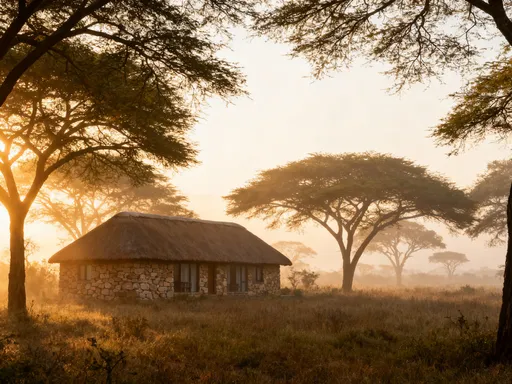
Among the earliest markers of Kruger’s human story are its original rest camps—Skukuza, Pretoriuskop, and Lower Sabie—established in the early 20th century when the idea of national parks was still novel. These were not luxury retreats but functional shelters for park staff and the few adventurous visitors who braved the rugged terrain. Today, they stand as living monuments to the dawn of African conservation. Their architecture, though modest, speaks volumes about the values of their time: durability, simplicity, and integration with the environment. Stone foundations, timber frames, and thatched roofs were chosen not for aesthetics alone but because they were locally available and naturally insulating, keeping interiors cool in summer and warm in winter.
Pretoriuskop, the oldest rest camp, founded in 1923, retains much of its original character. Walking its pathways, one notices the way buildings nestle into the rocky hillsides, their low profiles blending with the granite outcrops. The guest cottages, some over a century old, feature thick stone walls and wide eaves that shelter porches from torrential rains. These were not built for grandeur but for endurance—against both time and the elements. What’s remarkable is how little they feel out of place. Unlike modern developments that impose on landscapes, these structures seem to have grown from the earth itself, like termite mounds or baobab trees. They reflect a design ethic that prioritized humility over dominance, a principle that continues to guide Kruger’s development.
Skukuza, though larger and more developed, shares this heritage. Originally a ranger station, it evolved into the administrative heart of the park. Its early buildings, including the old warden’s office and staff quarters, were constructed using local materials and traditional methods. Thatching was done by hand, using grass harvested sustainably from surrounding areas. Even the placement of windows considered airflow and shade, reducing reliance on artificial cooling. These choices were born of necessity but became models of sustainable design long before the term existed. Today, visitors staying in these historic accommodations don’t just enjoy comfort—they participate in a legacy. Each night spent in a thatched cottage is a quiet homage to the pioneers who believed that protecting nature also meant living within its limits.
Skukuza: The Heartbeat of the Park
If Kruger has a central nervous system, it is Skukuza. Located near the confluence of the Sabie and Matjulu Rivers, this sprawling hub serves as the park’s logistical, educational, and cultural core. More than just a rest camp, Skukuza houses the headquarters of South African National Parks (SANParks) for Kruger, a comprehensive visitor center, a herbarium, and the Stevenson-Hamilton Memorial Library—one of the most important wildlife research collections in southern Africa. Named after James Stevenson-Hamilton, the park’s first warden, the library contains rare manuscripts, field journals, and decades of ecological studies, offering researchers and curious travelers alike a window into the park’s scientific soul.
The layout of Skukuza reflects its multifaceted role. Residential areas for staff and guests are separated from operational zones, yet all are connected by a network of footpaths and quiet roads. Solar lighting guides nighttime walks, minimizing light pollution that could disturb nocturnal animals. The outdoor amphitheater, nestled beneath fever trees, hosts educational talks and cultural performances, fostering a sense of community among visitors and staff. Even the fuel station is discreetly placed, shielded by vegetation to maintain the natural aesthetic. Every element is designed with intention, ensuring that human activity supports rather than detracts from the park’s mission.
One of Skukuza’s most inspiring features is its commitment to sustainability. The camp recycles greywater for irrigation, uses solar panels to supplement energy needs, and composts organic waste. The staff housing includes rainwater harvesting systems, and new constructions adhere to strict environmental guidelines. These practices are not just operational details—they are part of a broader philosophy that human presence in the wild must be regenerative, not extractive. For families visiting with children, Skukuza offers interactive exhibits at the Interpretive Centre, where kids can track animal footprints, learn about predator-prey relationships, and even simulate ranger patrols. It’s here that conservation becomes tangible, especially for younger minds beginning to understand their role in protecting the planet.
Pioneering Architecture in the Wild: How Buildings Blend In
Across Kruger, a consistent architectural language emerges—one defined by restraint, respect, and responsiveness to the environment. Whether in public rest camps or remote ranger stations, buildings are designed to disappear. Earth-toned walls, thatched roofs, and wooden shutters mirror the colors and textures of the bush. Structures are kept low, rarely exceeding the height of surrounding shrubs, ensuring they don’t obstruct animal movement or scenic views. This is not accidental; it is the result of deliberate design principles developed over decades to minimize ecological disruption while maximizing visitor experience.
One of the most important considerations in Kruger’s architecture is animal behavior. Fences are avoided wherever possible, and when necessary, they are designed to allow smaller species to pass underneath. Elevated walkways connect buildings in sensitive areas, preventing soil compaction and preserving ground cover. Lighting is kept to a minimum and directed downward to avoid disorienting nocturnal creatures. Even the placement of dining areas considers wind direction, so that food smells do not attract curious elephants or curious hyenas into guest zones. These subtle details reflect a deep understanding of the ecosystem and a commitment to coexistence.
Materials are sourced locally whenever possible—stone from nearby quarries, timber from sustainably managed forests, and thatch from reed beds maintained through rotational harvesting. This not only reduces the carbon footprint of construction but also ensures that buildings age gracefully, weathering to match the surrounding landscape. Over time, moss grows on rooftops, lichens stain walls, and trees encroach gently on pathways, blurring the line between built and natural environments. This integration is not just aesthetic; it is functional. A well-camouflaged building is less likely to provoke territorial animals or disrupt nesting birds. It also enhances the visitor experience, allowing guests to feel immersed in nature rather than separated from it by stark, artificial boundaries.
Hidden Landmarks: Forgotten Watchtowers and Old Ranger Stations
Off the main tourist routes, along dusty tracks frequented more by leopards than vehicles, lie remnants of Kruger’s past—abandoned watchtowers, decommissioned ranger stations, and rusting radio masts half-buried in sand. These silent structures, often overlooked, tell stories of courage, vigilance, and the ever-changing challenges of conservation. In the 1970s and 1980s, when rhino poaching surged, rangers manned remote outposts for weeks at a time, monitoring radio signals and patrolling on foot. Some of these stations were little more than corrugated iron shacks, yet they served as lifelines in the fight to protect endangered species.
Today, many of these sites have been repurposed or left to nature’s reclamation. A former observation tower near the Letaba River now serves as a birdwatching platform, its wooden stairs creaking underfoot but still offering panoramic views of the floodplain. Another, deeper in the northern sector, stands abandoned, its walls covered in graffiti from decades past, yet still standing as a monument to human dedication. These structures are not maintained for tourism but preserved as historical markers, reminding visitors that conservation is not a passive act but an ongoing struggle requiring sacrifice and perseverance.
Some of the most moving sites are the old boundary markers and stone cairns placed by early surveyors. These unassuming piles of rock, often hidden beneath fig trees or beside dry riverbeds, marked the original borders of the park when it was just a fraction of its current size. They symbolize the vision of those who first set aside this land for protection, long before the concept of biodiversity was widely understood. For thoughtful travelers, finding one of these markers feels like uncovering a secret—a quiet connection to the past, a reminder that every protected acre was once a choice, not a given. These landmarks may not appear on maps, but they are essential to understanding Kruger’s full story.
Luxury Meets Legacy: Private and Eco-Friendly Lodges
While public rest camps offer comfort and accessibility, the private concessions within Kruger—operated by renowned brands like &Beyond and Singita—represent the pinnacle of eco-luxury. Nestled in exclusive wilderness areas, these lodges provide intimate wildlife experiences while adhering to some of the strictest environmental standards in the industry. What sets them apart is not just their opulence—though spacious suites, private decks, and gourmet dining are standard—but their deep integration with conservation. Many are entirely off-grid, powered by solar energy, and use advanced water recycling systems to minimize their footprint.
Architecture in these lodges follows the same principles of blending in, but with refined craftsmanship. Elevated walkways connect rooms to main areas, preventing soil erosion and allowing animals to pass beneath. Canvas and thatch are used not for nostalgia but for breathability and sustainability. Glass walls maximize views while minimizing structural mass. Even the placement of swimming pools considers animal behavior—often raised or shielded to prevent accidental access. These lodges prove that luxury and environmental responsibility are not mutually exclusive but can enhance one another.
Importantly, these private operations contribute significantly to conservation funding. High daily rates include park levies and community development fees, supporting anti-poaching units, local schools, and healthcare initiatives. Guests are not just paying for comfort; they are investing in the park’s future. Educational sessions with resident naturalists deepen this connection, turning a safari into a journey of understanding. For families, these lodges often offer junior ranger programs, where children learn tracking, bird identification, and conservation ethics through hands-on activities. It’s an immersive way to instill lifelong respect for nature, making the experience meaningful beyond the photographs taken.
Final Reflections: Why These Structures Matter
As the final embers of a bushveld campfire fade into the night, the sounds of the wild take over—the distant call of a fish eagle, the rustle of a genet in the undergrowth, the soft murmur of the wind through the acacias. In that stillness, the presence of human-made structures feels not like intrusion but like harmony. The stone cottages, the thatched roofs, the silent watchtowers—they are not separate from nature but part of its story. They stand as quiet witnesses to a century of conservation, to the people who fought to protect this land, and to the ongoing effort to balance human needs with ecological integrity.
Kruger National Park is more than a place to see animals. It is a living archive of design, dedication, and vision. Its buildings—whether humble ranger posts or elegant eco-lodges—serve a purpose far beyond shelter. They educate, inspire, and endure. They remind us that conservation is not only about saving species but about shaping spaces where people and nature can coexist with dignity and respect. For the thoughtful traveler, especially those who value heritage, sustainability, and meaningful experiences, these hidden landmarks offer a deeper safari—one that engages the mind as much as the heart.
Next time you plan a visit, look beyond the game drives. Take a guided tour of Skukuza’s historical sites. Walk the paths of Pretoriuskop and imagine the early rangers who once patrolled these hills. Pause at an old watchtower and listen to the silence it guards. In doing so, you don’t just see Kruger—you understand it. And in that understanding lies the true magic of this extraordinary place: that even the quietest structures have stories worth hearing, and every stone laid in the bush is a promise kept to the wild.